The program
Horse Training in Puerto Rico
Trust-based horsemanship that builds confident, willing partners. Horses of every breed and background are welcome.
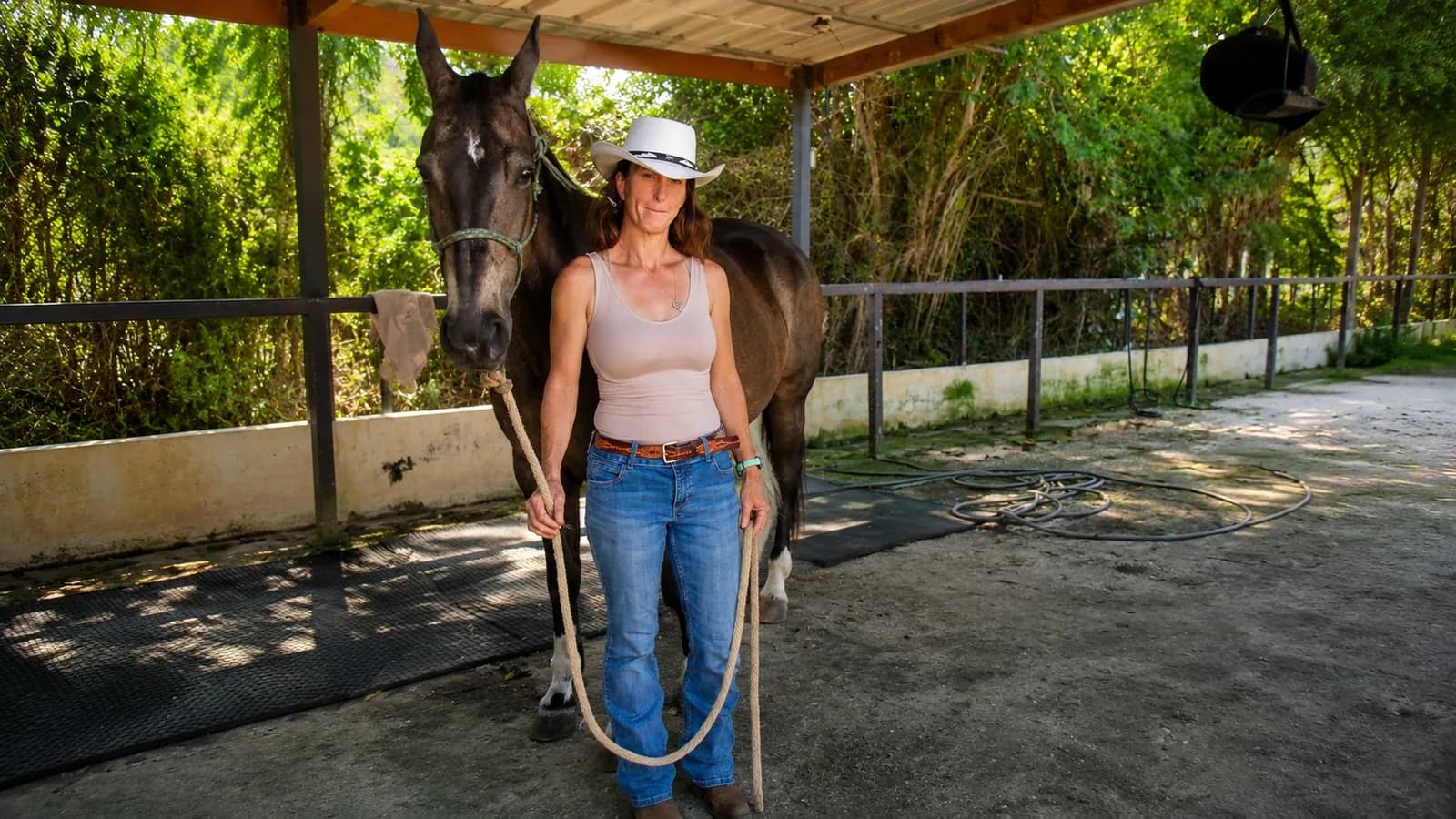
At Barefoot Riding PR the horse training program focuses on developing calm, responsive and well-mannered partners through patient, consistent work. Horses in the program are handled and trained regularly, giving them a steady routine that encourages understanding, confidence and real progress. Each horse receives individual attention, ground work and real-world exposure to prepare them for safe trail riding and solid horsemanship. Whether your horse needs a proper start, a tune-up, or help overcoming specific problems, you get honest communication, thoughtful training, and a focus on long-term success for both horse and owner.
What the program costs and what you get
$500 for 16 sessions over four weeks. Stable and feed are separate. Your horse is worked four days a week for four weeks, sixteen sessions in total, covering ground work, manners, responsiveness and building confidence under saddle. It suits young or green horses and horses that need a refresher. You get a video every week showing the improvement, so you can see what changed rather than take my word for it.
- Sixteen sessions over four weeks, four days a week.
- Ground work first, then manners, then listening, then riding.
- A progress video every week.
- Any breed. Young horses that have never been started, horses coming back after time off, and horses with a specific problem.
Step 01
Ground work
Step 02
Manners
Step 03
Listening
Step 04
Riding
Start here
What is your horse doing?
I fix horses that push, buck, or will not stand still. Head-shy about hands, will not load in a trailer, will not stand for the saddle, spooks at everything outside. Find the one that sounds like yours.
Every horse goes through the same four steps in the same order: ground work, manners, listening, riding. What changes from horse to horse is where it starts, and that is decided by what it is doing now rather than by its age or how long you have had it.
A horse that will not stand for the saddle and a horse that bucks both start at step one, on the ground, because in both cases the horse is not listening yet. A horse that drags you around on the rope starts at manners, which is the step most people skip. A horse that is fine on a rope and gone the second you take it off starts at listening, because it learned the rope rather than you. Nothing moves up a step before the one under it is honest.
The seven below are the ones the program is built around: young horses that have never been started, horses coming back after time off, and horses with one specific problem. Each card says which step your horse starts at and what the four weeks look like from there. If none of them is quite your horse, tell me what he actually does.
It will not stand still for the saddle
Starts with Ground work
Ground work, then the saddle goes back on
- The saddle goes away for the first sessions. A horse that will not stand is not being bad, it is not listening yet.
- Move the hips and shoulders off a light feel, both sides, until it is boring.
- Stand on a loose rope while I move around, throw the pad, do up the girth. Then we ride.
It drags me around on the rope
Starts with Manners
Manners and personal space
- The horse learns where you are and stays out of it. This is the step most people skip.
- Lead, stop, back up and turn on a loose rope, four days a week.
- By the end you can walk it anywhere with one hand.
It bucks, or will not keep going
Starts with Ground work
Back to the ground, then rebuild the ride
- A horse almost never bucks to be mean. It is scared and has nowhere to put it. A harder bit does not fix that.
- We restart on the ground so it has somewhere to put the worry, then add the saddle back slowly.
- Forward and level under saddle by the end, with no gadgets.
It is scared of my hands near its head
Starts with Ground work
Getting your hands to mean something safe
- Head-shy does not get better by grabbing harder.
- Small, quiet contact hundreds of times, ears, poll and muzzle, until the head comes down on its own.
- Bridling and worming stop being a fight.
It will not load in the trailer
Starts with Manners
Loading, without a fight
- Loading is a manners problem that happens to be in a metal box.
- We build it on the ground first: go forward off a feel, stop, stand, back out straight.
- Then the trailer, over and over, until walking on is nothing.
It spooks at everything outside
Starts with Listening
Getting the horse to look instead of run
- Bags, tarps, engines, clippers, traffic. We introduce them on purpose, one at a time.
- The goal is not a horse that never spooks. It is a horse that looks at it and goes back to work.
- Then we ride out on the road and prove it.
It has never been trained at all
Starts with Ground work
Started properly, from the ground up
- Nothing has gone wrong yet, which is the best thing you can bring me.
- All four steps in order, none of them rushed: ground work, manners, listening, riding.
- You get a video every week, so you see each step land.
Sixteen days over four weeks, $500, a video every week.
What it looks like when it works
A horse that stands still is a horse that is listening.
None of the four steps are dramatic. The horse learns that standing quietly to be haltered, saddled and handled is the easiest thing available to it, and after that everything else gets simpler.
Ground work
Most of the job happens before you get on.
This is what people ask for most. A horse that is easy on the ground is easy everywhere else. These are the things the first weeks are spent on.
Walks nice on a lead
No dragging you, no pulling ahead, no stopping dead.
Picks up all four feet
So you can clean them out without a fight.
Stands still to be brushed
Grooming, fly spray, blankets, all of it.
Tolerates noise
Bags, tarps, engines, clippers, traffic.
Tolerates objects
Things that move, flap, or turn up out of nowhere.
Loads in the trailer
Walks on, stands, comes off quiet.
Stays calm when things go wrong
Something spooks and the horse thinks instead of runs.
Stops spooking at everything
Looks at it, then goes back to work.
Nicer to be around
Easier to handle, easier to ride, safer for everybody.
What it looks like
Boring is what works.
Catch him, walk him, turn him, stop him, do it again. A horse standing on a loose rope while somebody moves around him, throws the pad on and does up the girth is not a trick, and it is not luck either. It is the thing that has to be true before the saddle is worth putting on, and getting there is four weeks of ordinary afternoons that look like this one.
Training by area
Where your horse is coming from.
The horse comes here for the four weeks, so the only geography that matters is the distance between your gate and mine. These six pages say what that distance means for dropping off, for coming to see the work, and for getting him home again.
Puerto Rico
The island-wide page. Drive times to the stable, what the four weeks cover, and how a horse gets here from anywhere.
Isabela
The home town. Isabela horses are already here, so drop off is a short trip rather than a haul.
Aguadilla
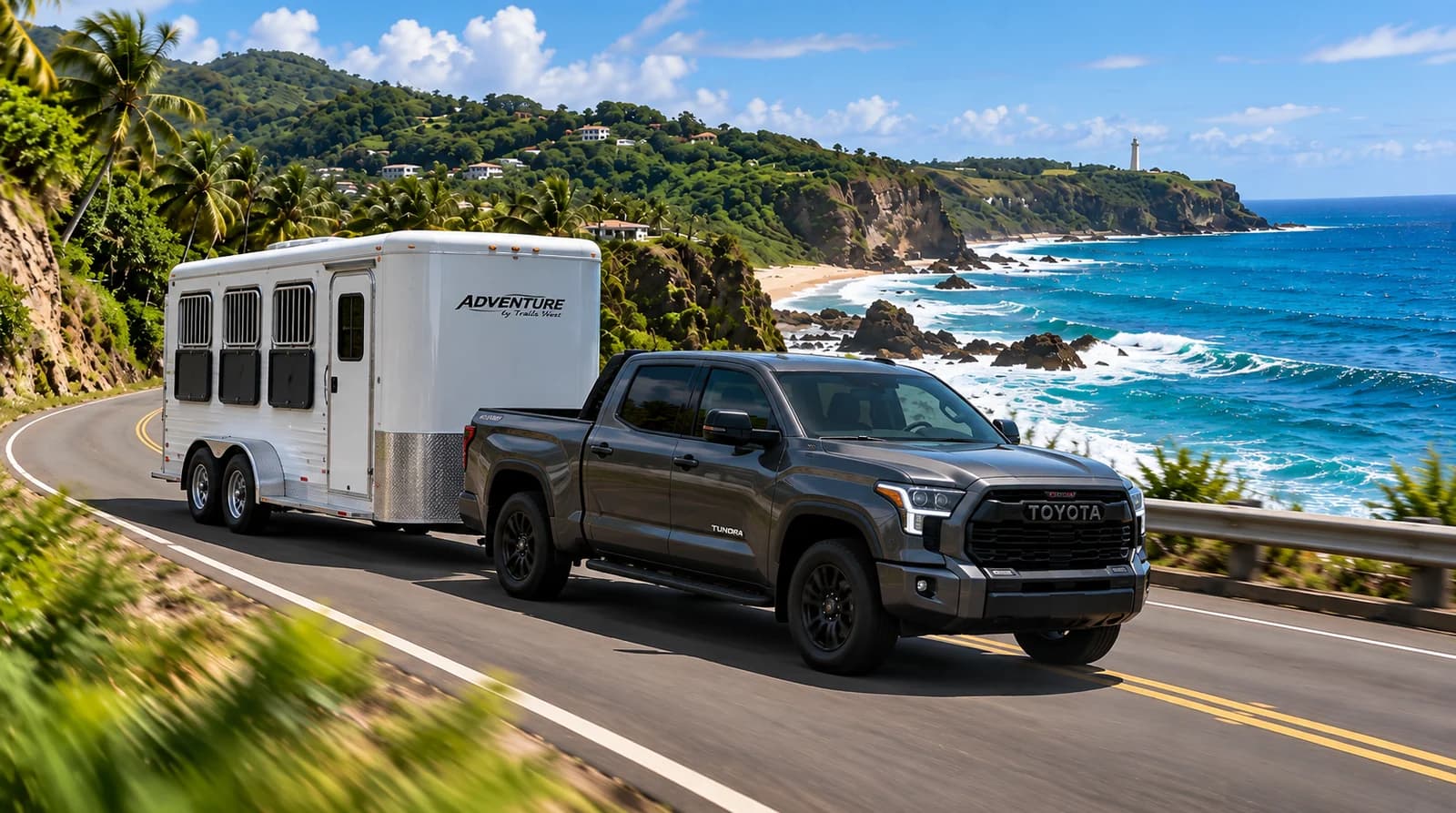
Fifty minutes up the road with the trailer on, the shortest run I make. Also where horses land at BQN.
Aguada
An hour and five down the west coast, in the farm country where horses are ordinary.
Rincón
An hour and twenty to the western corner. The furthest west coast town I run regularly.
Quebradillas
The next municipality east of Isabela on the north coast, and a short run either way.
Start the program
Tell me about your horse.
What it does now, and what you want it to do.
Questions
Before you book.
How much does training cost?
$500 for 16 days of work. Stable and feed are separate. I work your horse four days a week for four weeks. Ground work, manners, listening, then riding. You get a video every week so you can see what changed.
What kind of horses do you take?
Any breed. Young horses that have never been started. Horses coming back after time off. Horses that push, buck, will not stand for the saddle, are scared of your hands, or ignore you. Every horse I own came to me with one of those.
Where are you, and can I come see?
Hacienda Los Ponce in Isabela, on the northwest coast. Training, drop-offs and visits all happen here. Email barefootridingpr@gmail.com or call and WhatsApp 904.705.2294. I answer in a day.
Once the four weeks are done
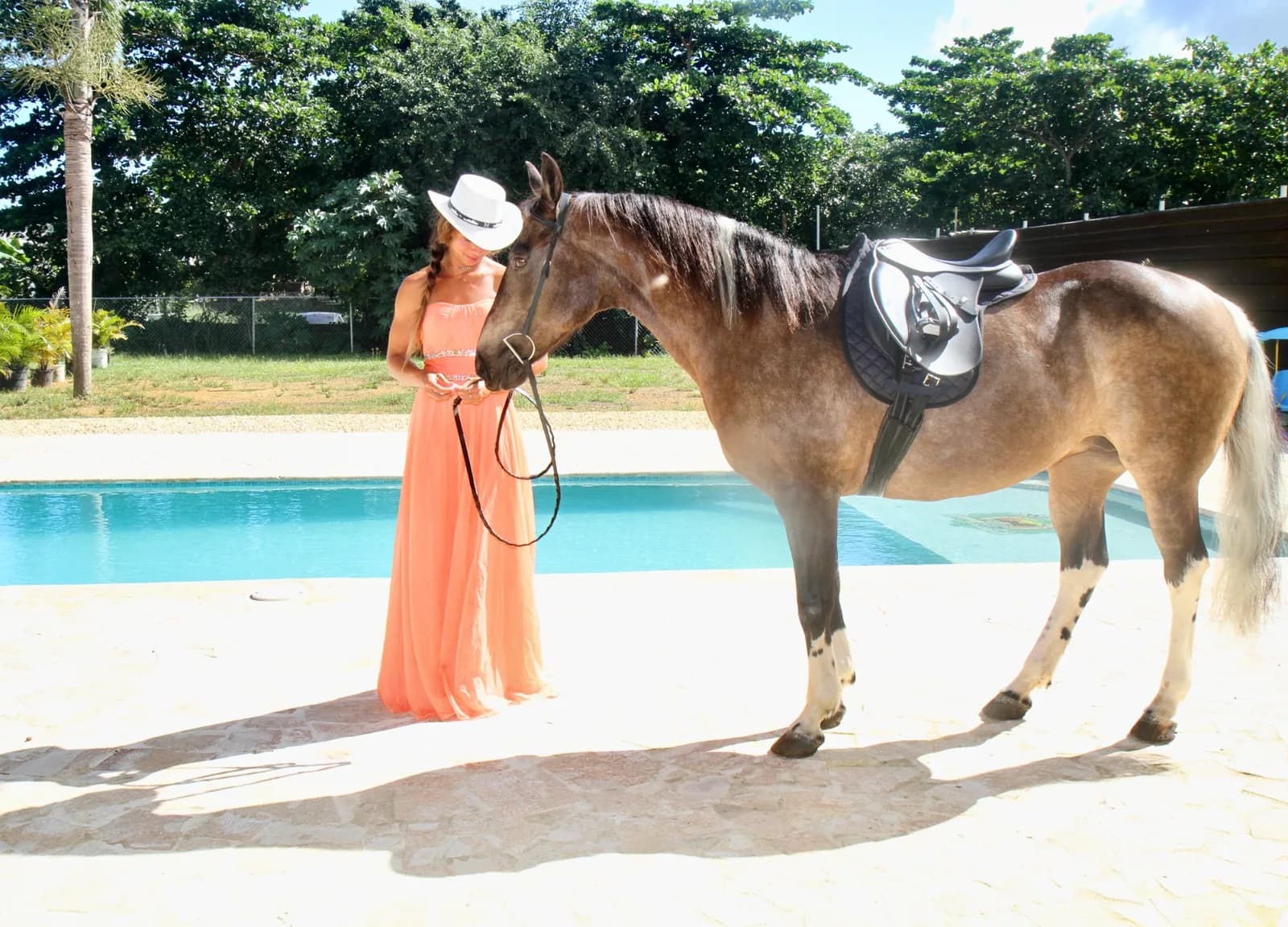
Most owners carry on from here in one of three directions. Some want the horse fit enough to run a pattern, which is what the rodeo work is for. Some want photographs of the horse now it stands quietly, which is what equestrian photography covers. And if your horse is somewhere else on the island, I can collect it and bring it here, including straight off the plane at the cargo building. You can also meet the horses that live here, or read the Paso Fino history if the horse you are buying is one of the island breed.
Breed is not what decides whether a horse is trainable, and this program takes any of them. It is worth knowing what you have in front of you, though. The two breeds most of this herd comes from have long histories that explain a lot about temperament and build: the Puerto Rican Paso Fino, which is the island's own breed and the reason a four beat gait feels the way it does, and the American Paint Horse, which is what Dolly and her daughter Sadie are.
Still got a question? Ask it and I will answer it.
Hacienda Los Ponce, Isabela, Puerto Rico. Email barefootridingpr@gmail.com or call and WhatsApp 904.705.2294. I answer within 24 hours.