Next town east
Horse Training in Quebradillas
Quebradillas sits east of Isabela on the north coast, where the land drops toward the ocean. It is the closest municipality to us going that way.
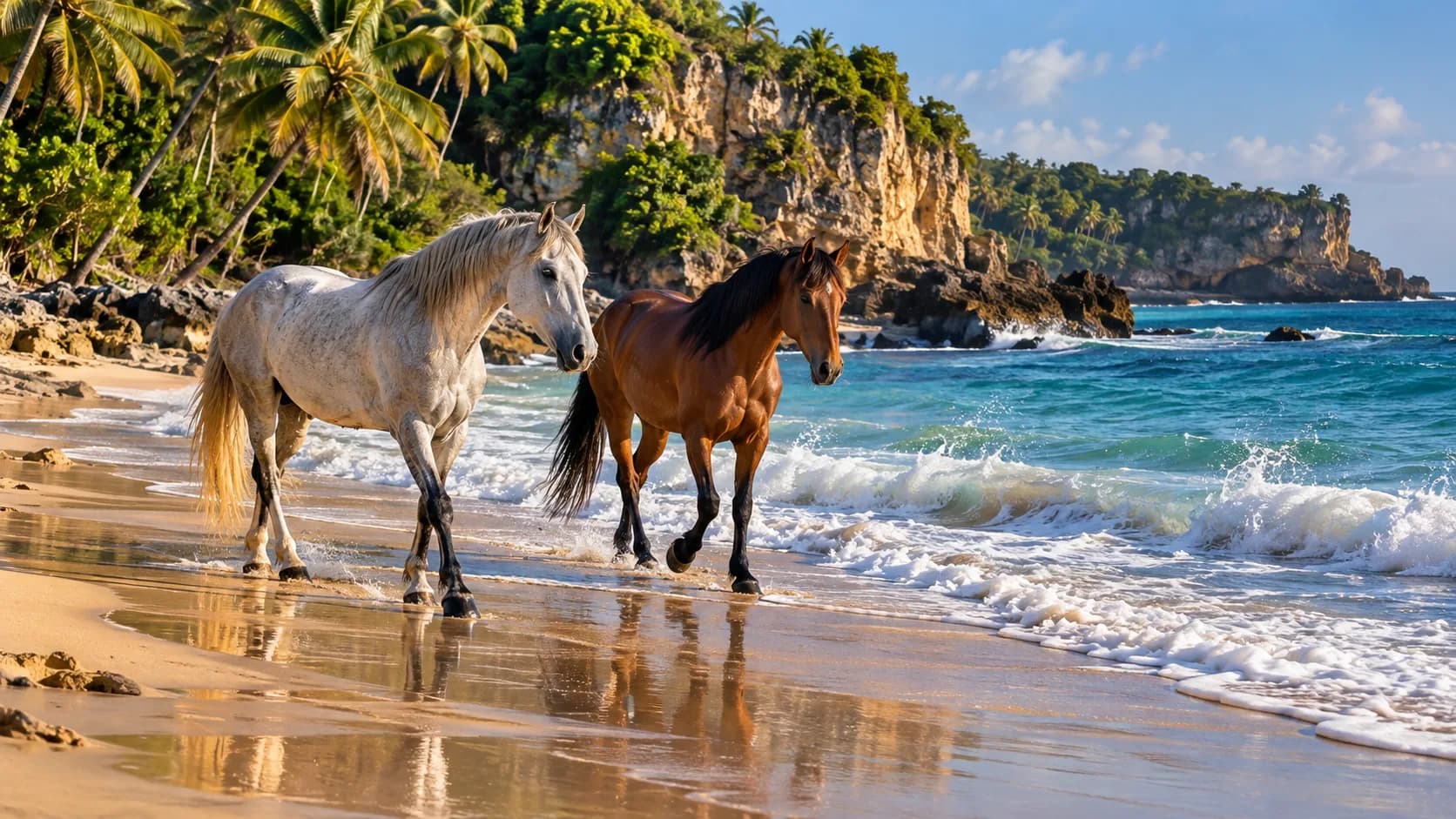
Quebradillas, east of Isabela on Puerto Rico’s north coast, mixes coastal ground with ordinary rural Puerto Rico. Rolling hills, cliffs, viewpoints that make you stop for a second, and beaches below. It is the closest municipality to the stable going east, which makes it one of the easier places on the map to move a horse to and from.
Facing north, not west
Aguadilla, Aguada and Rincón look west into the sunset. Quebradillas, like Isabela, faces north at the Atlantic, and the ground here rises and falls rather than lying flat. That is worth knowing when you are deciding what you want out of four weeks of work, because a horse who is only ever asked to behave on level, tidy footing has not really been asked. Uneven ground shows you quickly whether he is balanced or just going along with it.
A short run either way
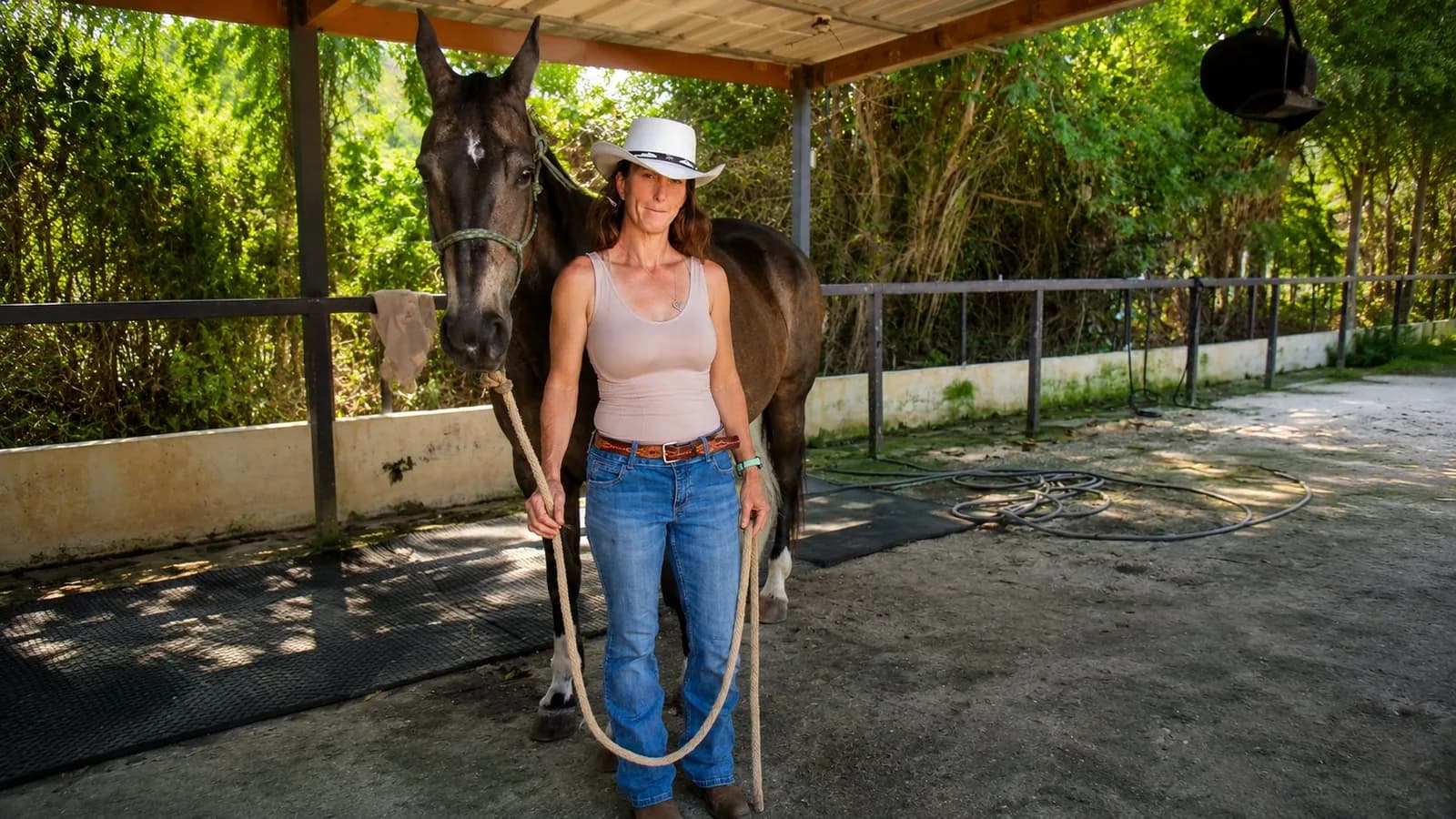
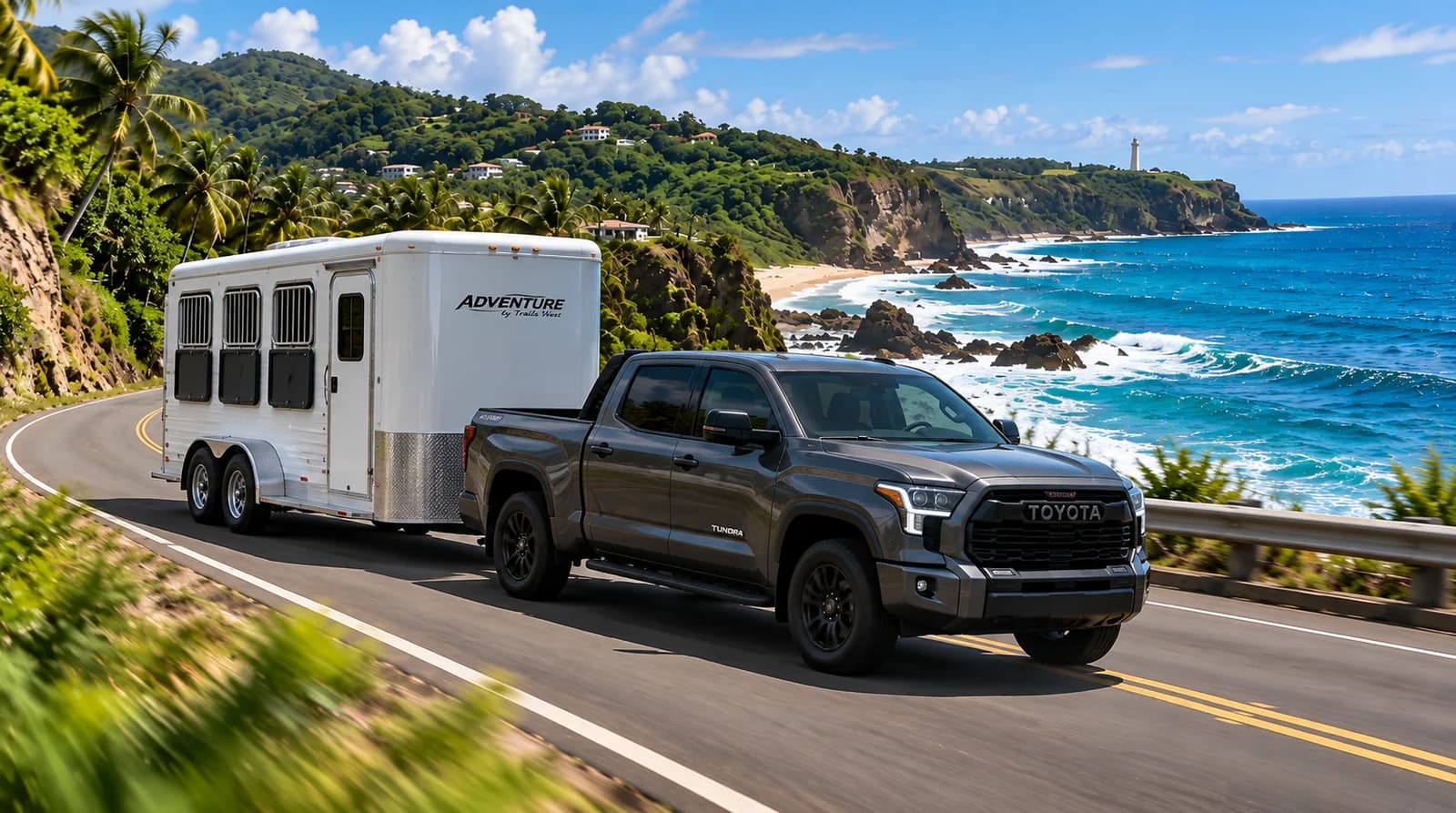
The program runs at Hacienda Los Ponce in Isabela, and your horse stays there for the month. From Quebradillas that is a short drive west rather than a day out. Drop off is easy, collection at the end is easy, and if you want to come and stand at the rail partway through the four weeks you can do it on an ordinary afternoon. I can also collect him and bring him back if the trailer is the problem. That is quoted separately from the program, takes up to three horses at a time, and I answer within 24 hours.
What the four weeks covers
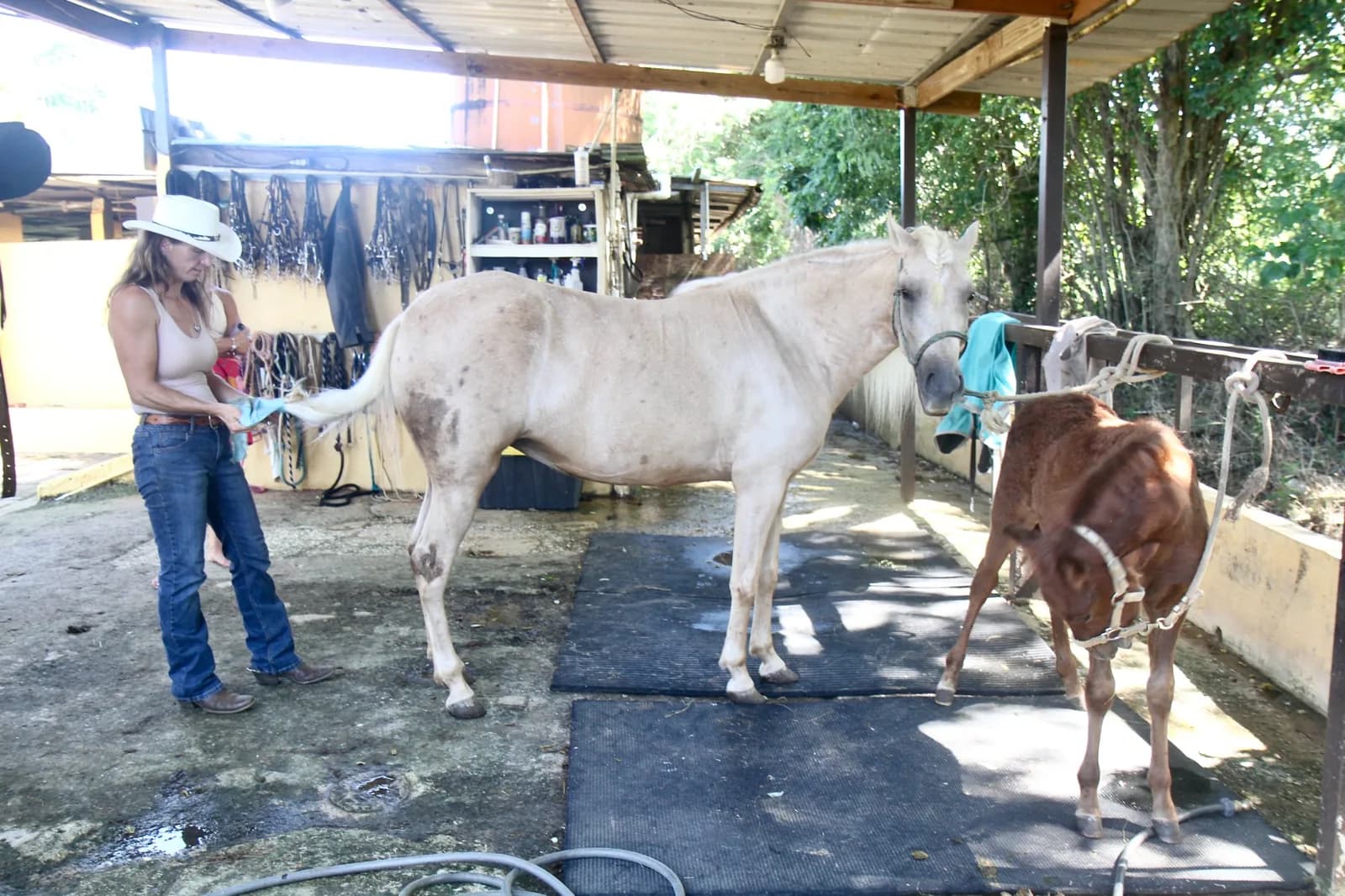
$500 for 16 sessions over four weeks. Stable and feed are separate. Four days a week, with a progress video every week. It runs ground work first, then manners, then listening, then riding under saddle, and it does not skip forward because the calendar says so. Any breed and any background: young horses nobody has started, horses coming backafter time off, horses that drag you around, buck, refuse to stand for the saddle, throw their head away from your hands, or spook at everything outside. The training page has the step by step version.
Where the work starts
Four of them, and what happens first.
The order never changes: ground work, manners, listening, riding. What changes is which step a horse starts at, and that is decided by what he is doing now.
It will not load in the trailer
Starts with Manners
Loading, without a fight
- Loading is a manners problem that happens to be in a metal box.
- We build it on the ground first: go forward off a feel, stop, stand, back out straight.
- Then the trailer, over and over, until walking on is nothing.
It spooks at everything outside
Starts with Listening
Getting the horse to look instead of run
- Bags, tarps, engines, clippers, traffic. We introduce them on purpose, one at a time.
- The goal is not a horse that never spooks. It is a horse that looks at it and goes back to work.
- Then we ride out on the road and prove it.
It drags me around on the rope
Starts with Manners
Manners and personal space
- The horse learns where you are and stays out of it. This is the step most people skip.
- Lead, stop, back up and turn on a loose rope, four days a week.
- By the end you can walk it anywhere with one hand.
It has never been trained at all
Starts with Ground work
Started properly, from the ground up
- Nothing has gone wrong yet, which is the best thing you can bring me.
- All four steps in order, none of them rushed: ground work, manners, listening, riding.
- You get a video every week, so you see each step land.
Two of those four are worth putting next to each other, because owners treat them as different problems and they are not. A horse that will not load and a horse that runs from a plastic bag are both being asked to go forward into something they would rather not, and both of them answer the same way once going forward off a light feel means something. The metal box is not the difficulty. The difficulty is the answer he currently gives to being asked.
The other three, the saddle, the bucking and the hands near his head, are on the training page with all seven in one place.
After the month is done
Where owners go from here splits about three ways. Some want the horse fit and level-headed enough to run a pattern, which is what the competition work is about. Some want photographs now that he stands still, and equestrian photography is $ from 150 an hour at the stable or $ from 250 an hour on location with the first 15 km included. And some decide they want a second horse, in which case Cha Cha, an eight year old chestnut Paso Fino gelding at $1,500, and Paco, a young chestnut Paso Fino colt at $7,000, are on the sales page.
The rest of the coast
Quebradillas is a short run west. What is the horse doing?
Email barefootridingpr@gmail.com or call and WhatsApp 904.705.2294. I answer within 24 hours.