Ground work
Most of the job happens before you get on
This is what people ask me for most. A horse that is easy on the ground is easy everywhere else. Tick what you need and send it to me.
The idea
What ground work actually means
A horse that is easy on the ground is easy everywhere else. Before anything happens in the saddle, the horse has to lead without dragging you, stand still while you work around it, pick its feet up, and think instead of run when something surprises it. That is ground work, and it is the part most people skip.
It is also the first two rungs of the four the training program works through: Ground work, Manners, Listening, Riding. Nothing moves up a rung until the one below it is boring.
The checklist
The nine things owners ask for.
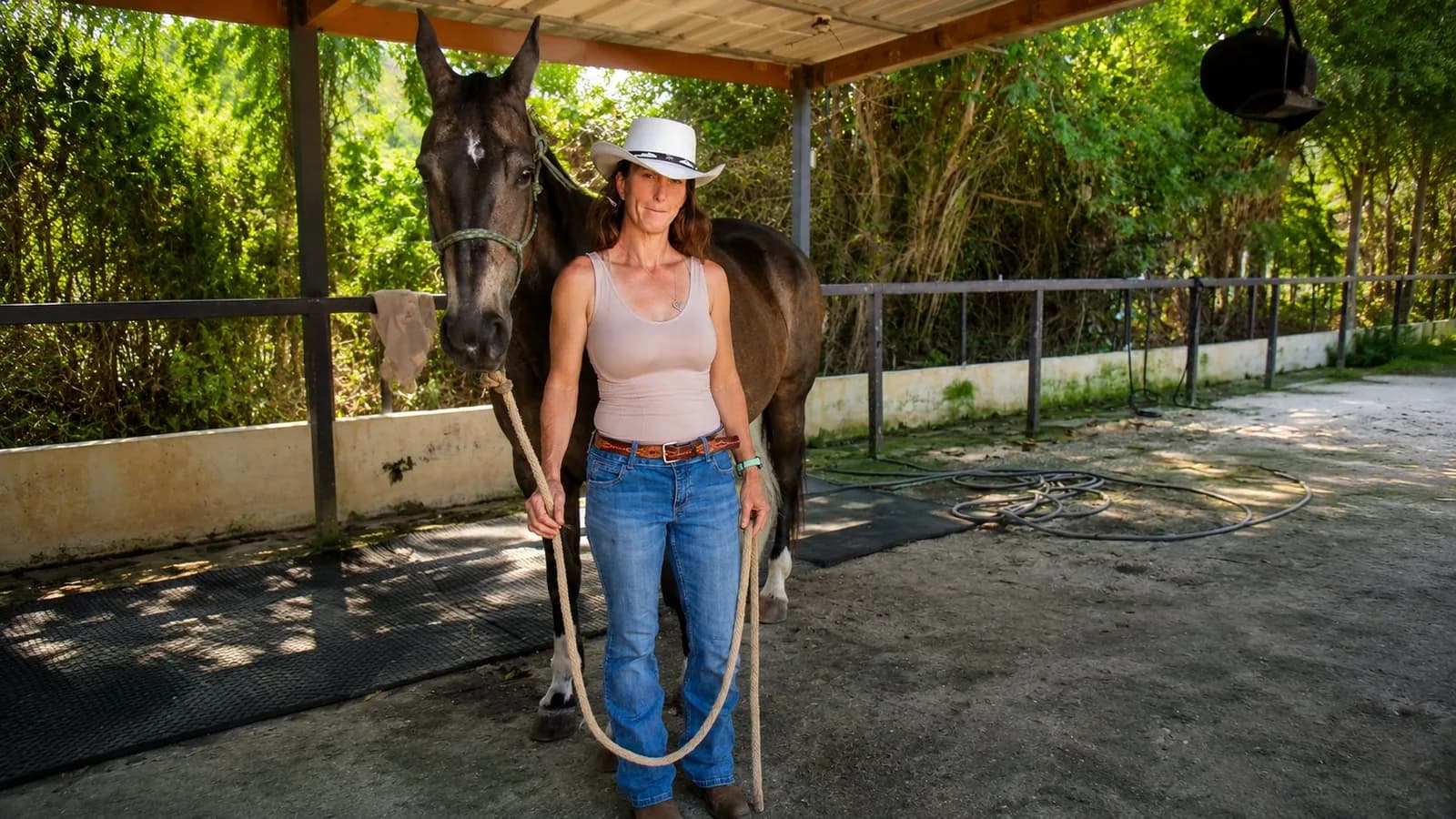
Standing untied to be brushed is the whole list in one picture. The horse is not held, not tied and not being made to do anything.
Walks nice on a lead
No dragging you, no pulling ahead, no stopping dead.
Picks up all four feet
So you can clean them out without a fight.
Stands still to be brushed
Grooming, fly spray, blankets, all of it.
Tolerates noise
Bags, tarps, engines, clippers, traffic.
Tolerates objects
Things that move, flap, or turn up out of nowhere.
Loads in the trailer
Walks on, stands, comes off quiet.
Stays calm when things go wrong
Something spooks and the horse thinks instead of runs.
Stops spooking at everything
Looks at it, then goes back to work.
Nicer to be around
Easier to handle, easier to ride, safer for everybody.
Case work
Four problems that get fixed on the ground.
These are real cases, and the plan for each is the one used at the stable rather than a general principle.
Manners and personal space
Starts at: Manners
- The horse learns where you are and stays out of it. This is the step most people skip.
- Lead, stop, back up and turn on a loose rope, four days a week.
- By the end you can walk it anywhere with one hand.
Getting your hands to mean something safe
Starts at: Ground work
- Head-shy does not get better by grabbing harder.
- Small, quiet contact hundreds of times, ears, poll and muzzle, until the head comes down on its own.
- Bridling and worming stop being a fight.
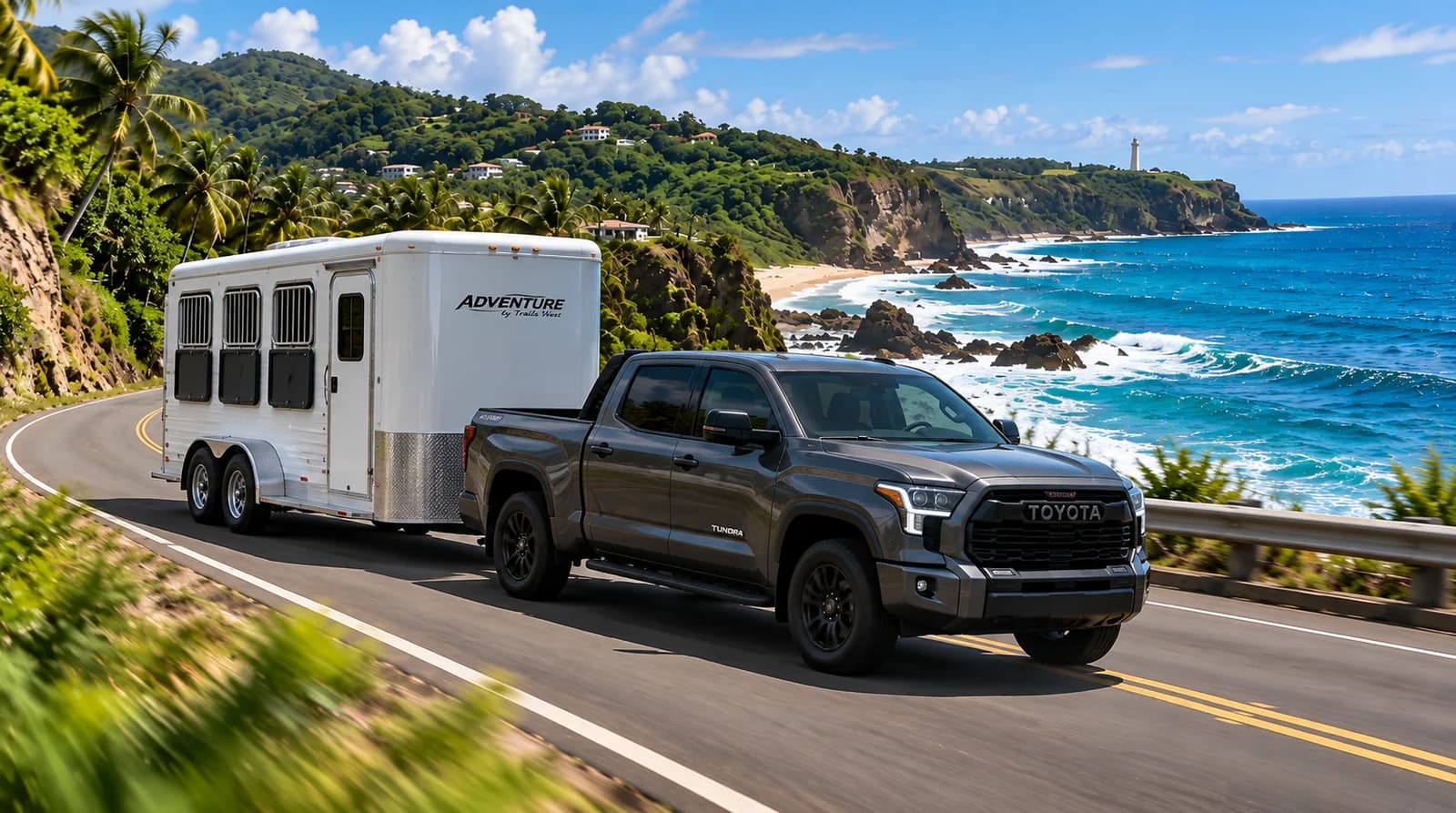
Loading, without a fight
Starts at: Manners
- Loading is a manners problem that happens to be in a metal box.
- We build it on the ground first: go forward off a feel, stop, stand, back out straight.
- Then the trailer, over and over, until walking on is nothing.
Getting the horse to look instead of run
Starts at: Listening
- Bags, tarps, engines, clippers, traffic. We introduce them on purpose, one at a time.
- The goal is not a horse that never spooks. It is a horse that looks at it and goes back to work.
- Then we ride out on the road and prove it.
Cost and cover
How it is priced
Ground work is not sold separately. It is where the four week program starts, and for a lot of horses it is where most of the four weeks is spent. $500 for 16 sessions over four weeks, four days a week. Stable and feed are separate. You get a video every week so you can see what changed.
If you want to see it rather than read about it, the training videos page has real sessions. If you would rather talk it through, tell me what your horse is doing and I will tell you where we would start.
Ground work by town
Your horse comes to Hacienda Los Ponce in Isabela for the program. These pages cover what that means depending on where you are:
Tell me what your horse is doing on the ground and I will tell you where we start.