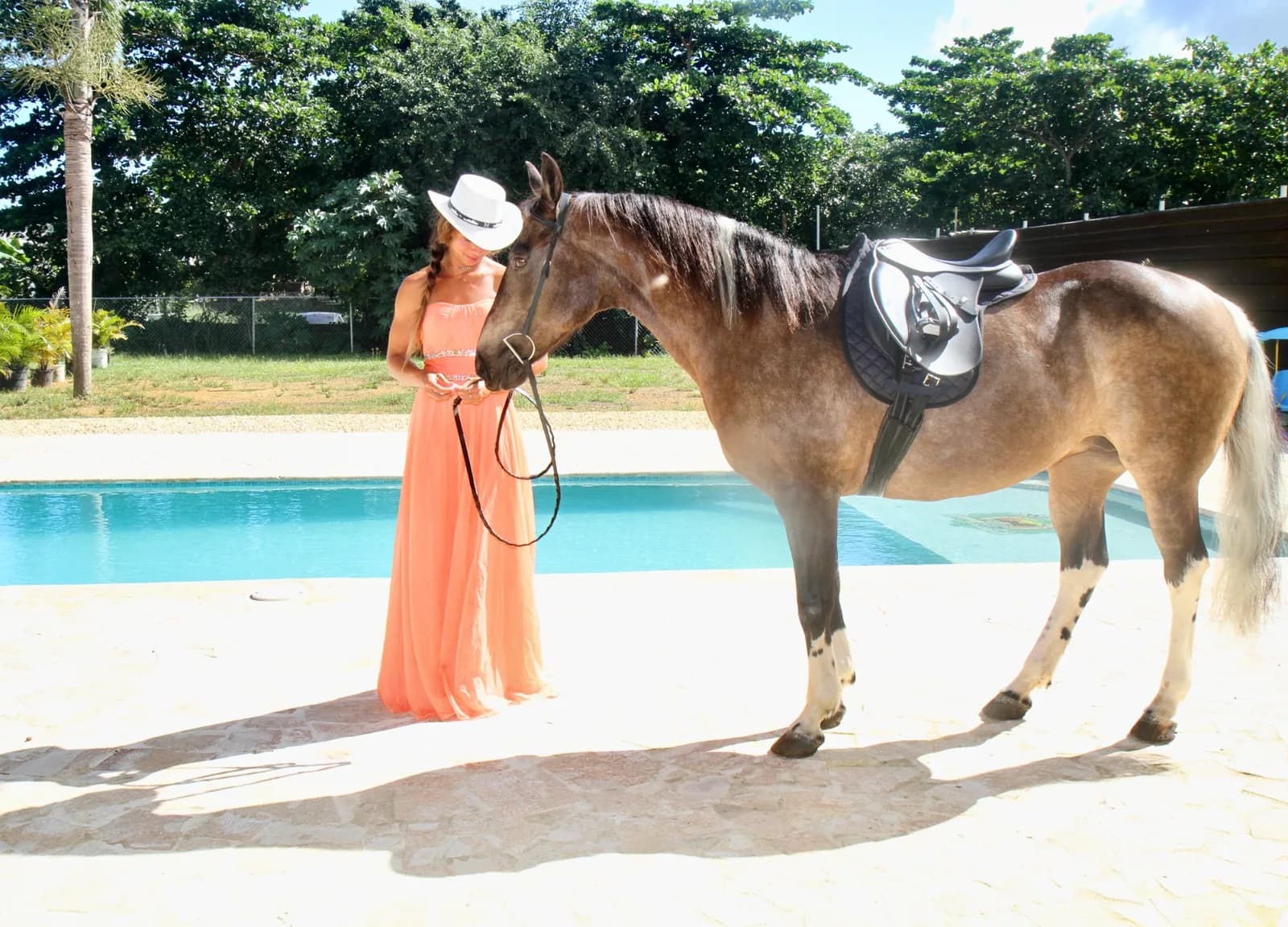
Puerto Rican Paso Fino horse showing classic breed conformation

Heritage · Breed History · Puerto Rico

The History of the Paso Fino in Puerto Rico

Five centuries of smooth-gaited heritage — how the Puerto Rican Paso Fino became the island's most celebrated horse breed and a symbol of Puerto Rican equestrian culture.

The Puerto Rican Paso Fino is more than a breed of horse — it's a living piece of Puerto Rican history. For more than 500 years, the Paso Fino has carried generations of Puerto Ricans across mountain trails, through coffee plantations, and into the plazas of festival days. Its distinctive four-beat gait is one of the smoothest in the equine world, and its temperament has made it a treasured partner for riders of every age and experience level.

This is the story of where the breed came from, how it evolved on the island, and why the Puerto Rican Paso Fino — known as the "Paso Fino Puro Puertorriqueño" — is considered one of the finest gaited horses on earth.

Chapter 1

Spanish Origins: 1493 and the First Horses in the New World

The story of the Paso Fino begins not in Puerto Rico, but in Spain. The breed's ancestors include the Spanish Jennet (known for its lateral ambling gait), the Barb from North Africa, and the Andalusian — three bloodlines that the Spanish considered the finest horses of their era.

When Christopher Columbus arrived in the New World, he brought Spanish horses with him. On his second voyage in 1493, Columbus landed on the island of Hispaniola with a group of horses that would become the foundation stock for all horse breeds in the Americas. Later voyages brought more horses, and the Spanish established breeding operations across the Caribbean.

Shortly after, in 1509, Juan Ponce de León — who had sailed with Columbus on that second voyage — became the first Spanish governor of Puerto Rico. He brought horses with him, and the foundation of the Puerto Rican equestrian tradition was laid. These early horses were the ancestors of what would eventually become the Paso Fino Puro Puertorriqueño.

Chapter 2

The Paso Fino Takes Root on the Island

Over the next several centuries, Puerto Rican breeders refined the Spanish stock into something distinctly their own. Puerto Rico's geography — steep mountains, long valleys, and rough terrain — favored horses with sure-footedness, endurance, and an unusually smooth gait that could cover ground without tiring horse or rider.

Unlike the trotting horses that dominated European cavalry, the Puerto Rican Paso Fino inherited and intensified the lateral ambling gait of its Spanish Jennet ancestors. This gait — a four-beat pattern in which each hoof strikes the ground independently — produces almost no vertical movement in the rider. On a good Paso Fino, a rider can carry a full glass of water across uneven ground without spilling a drop.

By the 19th century, the Paso Fino had become deeply embedded in Puerto Rican culture. Sugar cane plantation owners used them as working horses. Coffee growers in the central mountains relied on them to navigate steep terrain. And wealthy Puerto Rican families used them as riding and carriage horses, taking pride in their bloodlines the way European nobility prided their Andalusians.

Chapter 3

The Three Gaits of the Puerto Rican Paso Fino

What makes the Paso Fino unique is its natural, inherited four-beat lateral gait — performed at three distinct speeds. No Paso Fino needs to be taught to gait; they are born with it, and proper Paso Fino horses pass this trait down through generations.

Classic Fino (Paso Fino Fino)

Collected · Show Gait

The most refined and difficult of the three gaits. In the classic fino, the horse moves with extreme collection — very short, rapid, evenly-spaced steps that produce minimal forward motion. This is the show gait, judged on cadence, evenness, and precision. Only a small percentage of Paso Finos can perform the classic fino at competition level, and these horses are considered the breed's elite.

Paso Corto

Medium · Trail Pace

A medium-speed gait suitable for trail riding and extended distances. The paso corto has a slightly longer stride than the classic fino but retains the smoothness that makes Paso Finos so comfortable to ride. It's the gait most riders use for pleasure riding and covering ground at a working pace.

Paso Largo

Extended · Ground-Covering

The fastest of the three gaits, the paso largo extends the stride significantly while maintaining the four-beat pattern and lateral smoothness. A well-bred Paso Fino can perform the paso largo at speeds comparable to a cantering horse — but without the rider ever leaving the saddle. This is the gait of choice when you need to cover ground quickly in comfort.

Chapter 4

Conformation & Temperament

The Puerto Rican Paso Fino is typically 13 to 15 hands tall — smaller than most North American riding breeds, but powerful for its size. The ideal Paso Fino has a refined head, arched neck, sloping shoulder, strong back, and well-muscled hindquarters. Their movement is upright and proud, with a flowing mane and tail that are rarely trimmed.

Beyond conformation, Paso Finos are prized for their temperament. They're known for being intelligent, willing, and people-oriented — traits that were selectively bred over centuries of close partnership with Puerto Rican families. A good Paso Fino forms strong bonds with its handler and is eager to please, which is why the breed has become popular with riders of all ages and experience levels.

Chacha — a Puerto Rican Paso Fino mare showing classic breed conformation

Chapter 5

The Paso Fino in Modern Puerto Rico

Today, the Puerto Rican Paso Fino is recognized as a distinct breed — the "Paso Fino Puro Puertorriqueño" — and is protected and promoted by associations across the island. Competitions, exhibitions, and fiestas patronales throughout Puerto Rico feature Paso Fino classes, and the breed remains central to the island's cultural identity.

In recent decades, the Puerto Rican Paso Fino has also gained international recognition. Horses have been exported to the mainland United States, Colombia, and Europe, where riders appreciate the breed's comfortable gait and willing temperament. Despite this expansion, the heart of the breed remains in Puerto Rico, where bloodlines are closely maintained and breeders continue the tradition that began more than 500 years ago.

For anyone buying a horse in Puerto Rico today, the Paso Fino represents more than a good riding partner. It represents a direct link to the island's history — a breed shaped by Puerto Rico's landscape, culture, and people, and one that carries that heritage forward with every step.

Ready to Meet a Paso Fino?

Browse Paso Fino horses for sale in Puerto Rico

We have currently available Puerto Rican Paso Finos in Isabela. Island-wide delivery available.

View Available Horses →